Trying to choose between Stock Island and Key West for your Florida Keys home base? It is a common question, especially if you want the Keys lifestyle but need the right mix of budget, boating access, walkability, and day-to-day convenience. The good news is that each location offers a distinct experience, and understanding those differences can make your decision much easier. Let’s dive in.
Stock Island vs. Key West at a Glance
If you want the short version, Stock Island is typically the more practical and lower-cost option, while Key West offers a larger, more walkable setting with more historic character and a denser mix of amenities.
According to ACS community data, Stock Island has 4,186 residents across 2.105 square miles, while Key West has 24,985 residents across 7.209 square miles. That difference matters in real life. Stock Island tends to feel smaller, more compact, and more local, while Key West feels busier, broader, and more built out.
The same data also shows a younger median age in Stock Island at 35, compared with 46 in Key West. While every buyer’s lifestyle is different, this helps explain why the pace and housing mix can feel noticeably different from one area to the other.
Housing Costs and Entry Point
For many buyers, price is where the conversation starts. Based on the same ACS profile data, the median housing value in Stock Island is $511,100, compared with $793,400 in Key West.
That gap of about $282,300 makes Stock Island the clearer lower entry point if you want to stay near Key West without stepping into Key West pricing. If your goal is to maximize proximity to the island lifestyle while keeping your purchase more budget-conscious, Stock Island will likely stand out quickly.
How the Housing Mix Differs
Price is only part of the story. The housing stock itself also shapes what you can expect to find.
In Stock Island, the housing inventory includes 770 single-family units, 713 multifamily units, and 312 mobile-home units, according to the ACS report. Key West has a much larger inventory overall, with 7,388 single-family units, 6,107 multifamily units, and 370 mobile-home units.
Stock Island also leans more heavily toward renters, with 1,074 renter-occupied units compared with 532 owner-occupied units. That can create a less traditional residential mix than many buyers expect. Key West has a more balanced owner-renter split and a much deeper inventory base, which can open up more options depending on your goals.
Boating Access and Marina Lifestyle
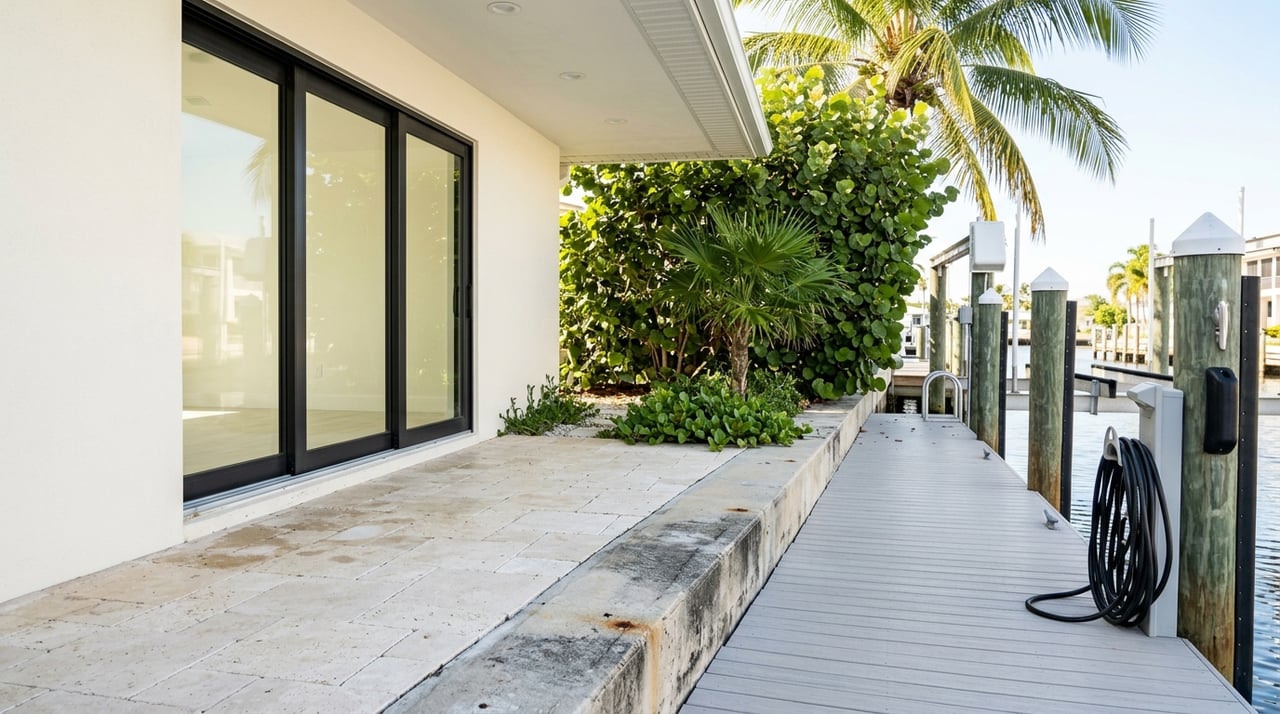
If boating is central to how you want to live, Stock Island often gets the first look. It is the more obvious working-waterfront choice, with infrastructure that supports a marine-focused lifestyle in a very direct way.
Stock Island Marina Village says its slips are about 30 seconds from open Atlantic waters and include fuel, pump-out, parking, security, dog parks, on-site dining, and shuttle service to downtown Key West. That kind of setup is especially appealing if your routine revolves around getting on the water efficiently.
Monroe County planning documents, as summarized in the research, describe surrounding land use on Stock Island as mixed-use and maritime-industries, with boat repair, warehouse, industrial, marina, retail, restaurant, office, hotel, and liveaboard slip capacity in the area. In simple terms, Stock Island has a practical, water-working character that many marine buyers appreciate.
Key West Boating Access
Key West still offers excellent boating access, but the feel is different. The marina scene is more closely tied to the historic and walkable core.
Key West Bight Marina is located in the Historic Seaport and is a short walk from Duval Street and Mallory Square. That can be a great fit if you want your boating access connected to dining, shops, and the in-town energy of Key West.
For public launch access, the Florida Fish and Wildlife Conservation Commission boating guide lists several options on both islands. Stock Island options include Cow Key Marina, Murray Marine, Oceanside Marina, and the Stock Island Public Boat Ramp. Key West options include Simonton Beach Park, Garrison Bight Key West City Marina, and the 11th Street Boat Ramp. Overall, Stock Island reads as more marina-and-service-oriented, while Key West feels more in-town and walkable.
Walkability, Transit, and Daily Rhythm
Your daily routine matters just as much as your property itself. If you picture yourself walking to more destinations and spending more time in a dense, amenity-rich setting, Key West has the edge.
The City of Key West transit system serves Key West, Stock Island, the Lower Keys, and Marathon, and the on-demand zone now includes Stock Island. That gives you flexibility in both locations, but Key West remains the more pedestrian-oriented environment overall.
Historically, the Duval Loop connected areas such as Old Town, the seaport, and Truman Waterfront with restaurants, galleries, gift shops, and theatres. While that service was suspended beginning January 1, 2026 and shifted to the on-demand system, the pattern still highlights what many buyers already sense: Key West packs more destinations into a walkable footprint.
Stock Island’s Day-to-Day Feel
Stock Island tends to feel more neighborhood-centered and less visitor-driven. That is part of its appeal.
For example, Bernstein Park on Stock Island includes baseball, football, and soccer fields, a playground, a community center, and a fitness court. Amenities like that support a more local daily rhythm, where the focus is often on practical living rather than being in the middle of a busy visitor area.
If you want a home base that feels more grounded and functional, Stock Island may line up better with your routine. If you want to be closer to the concentration of dining, arts, and historic waterfront activity, Key West may feel like the better fit.
Historic Rules and Renovation Planning
One important ownership difference often gets overlooked until later in the search: exterior review requirements.
In Key West, the Historic Preservation Division says a Certificate of Appropriateness is required for new structures and many exterior changes. That includes painting, repairs, additions, fences, decks, signs, landscaping, and demolition. The city also notes that most districts beginning with H are part of the historic district.
For buyers who want flexibility with renovations or exterior updates, that can add time and another layer of review. It does not mean Key West is the wrong choice, but it does mean you should go in with a clear understanding of what ownership may involve if your property falls within those rules.
Stock Island does not carry the same city historic-district framework described in the research above. For some buyers, especially those focused on ease and practicality, that difference can be meaningful.
Which Location Fits Your Goals?
The best choice depends on how you want to live in the Keys, not just what zip code sounds most familiar.
Stock Island may fit you better if you want:
- A lower housing entry point near Key West
- A more compact, local-feeling home base
- Easier access to marinas, boat ramps, and marine services
- A practical, working-waterfront setting
- A lifestyle centered more on water access than walkability
Key West may fit you better if you want:
- A larger housing market with more inventory overall
- A more walkable, amenity-rich daily routine
- Closer access to the Historic Seaport, Old Town, and in-town destinations
- Historic character and a denser urban island feel
- A home base where boating, dining, arts, and pedestrian convenience intersect
A Smart Way to Compare in Person
If you are deciding between these two areas, try to compare them through the lens of your real routine. Think about where you would launch the boat, how often you want to drive versus walk, whether exterior renovation flexibility matters to you, and what price point feels comfortable.
That is often where the answer becomes clear. A boating-first buyer may quickly prefer Stock Island, while someone focused on walkability, historic surroundings, and an in-town experience may feel more at home in Key West.
When you are ready to sort through the options, Jamie Lynne Walker can help you compare neighborhoods, property types, and lifestyle fit across the Lower Keys with a practical, local perspective.
FAQs
What is the main difference between Stock Island and Key West for homebuyers?
- Stock Island is generally smaller, more compact, and lower in housing cost, while Key West is larger, more walkable, and has a higher median housing value.
Is Stock Island more affordable than Key West for buyers?
- Yes. According to ACS data cited in the research, the median housing value is $511,100 in Stock Island versus $793,400 in Key West.
Is Stock Island a better choice for boating access than Key West?
- It can be, especially if you want quick access to marinas, boat ramps, and marine services in a more working-waterfront setting.
Does Key West have more historic property rules than Stock Island?
- Yes. In Key West, many exterior changes may require a Certificate of Appropriateness, especially in historic districts.
Is Key West more walkable than Stock Island for daily life?
- Yes. Based on the transit and area descriptions in the research, Key West is the more amenity-dense and pedestrian-oriented environment.
Which area is better for a local, less visitor-driven feel in the Lower Keys?
- Stock Island generally offers the more neighborhood-centered and practical day-to-day feel, while Key West tends to have more in-town activity.