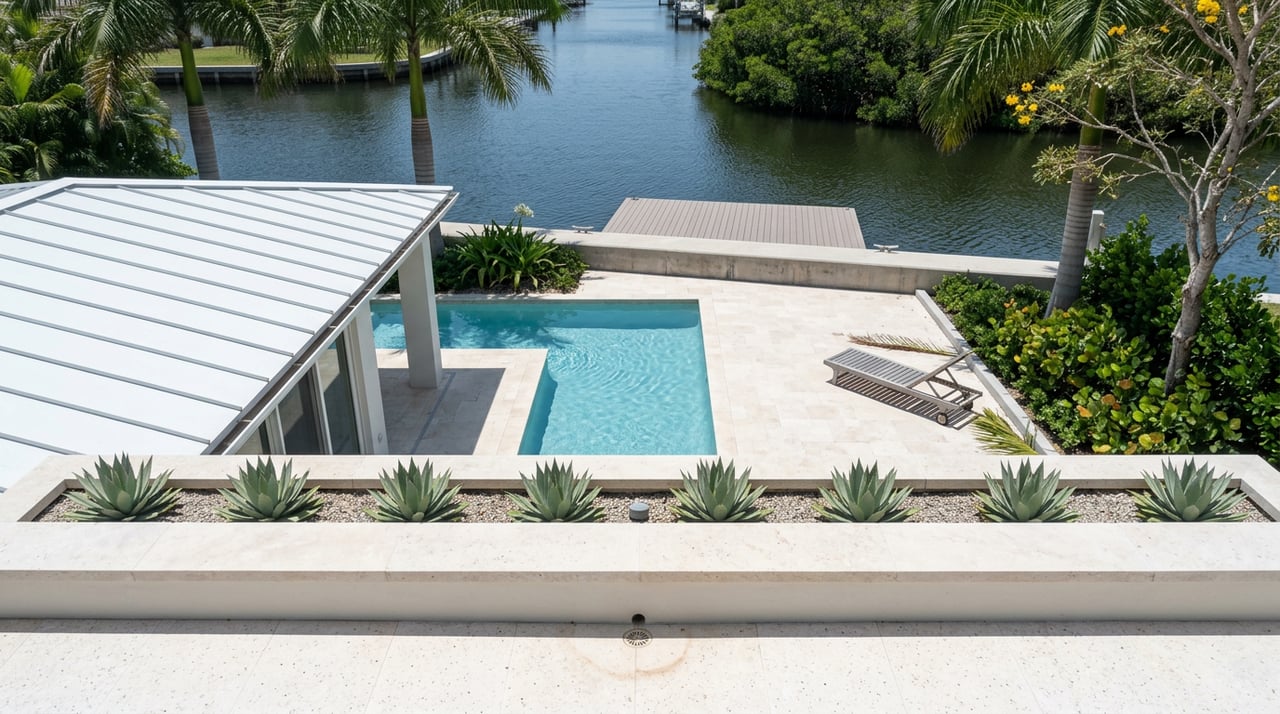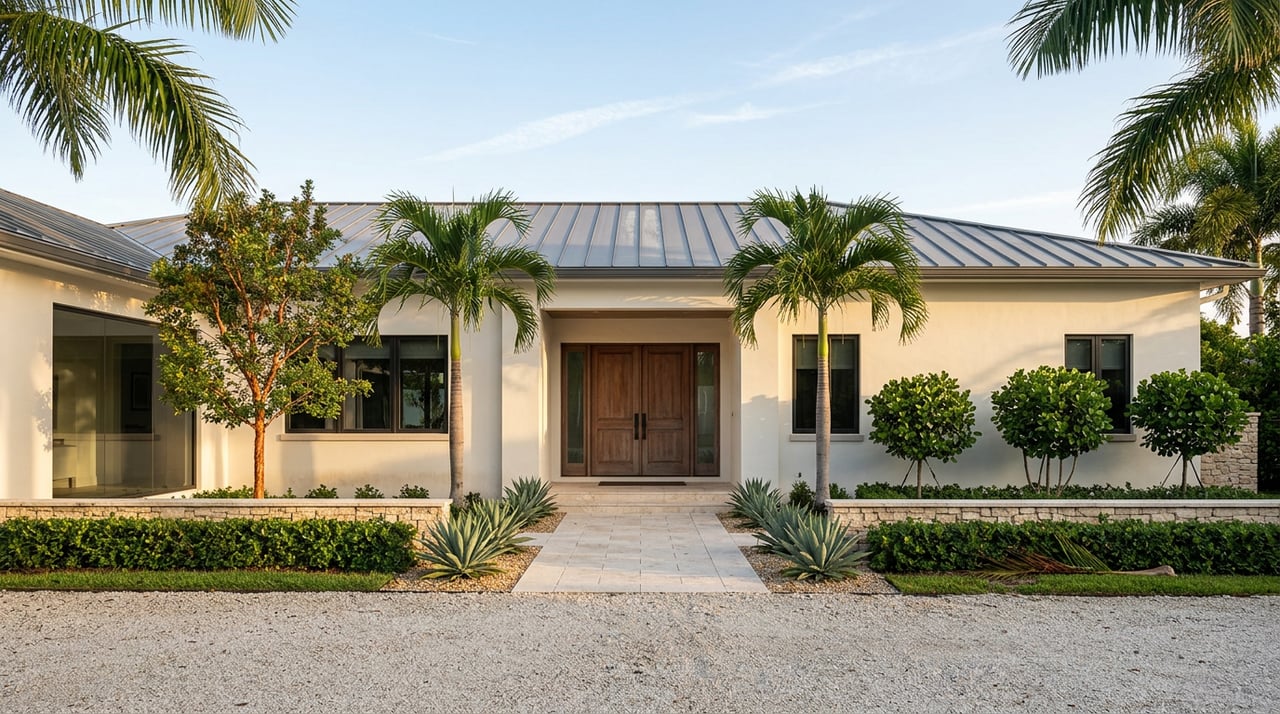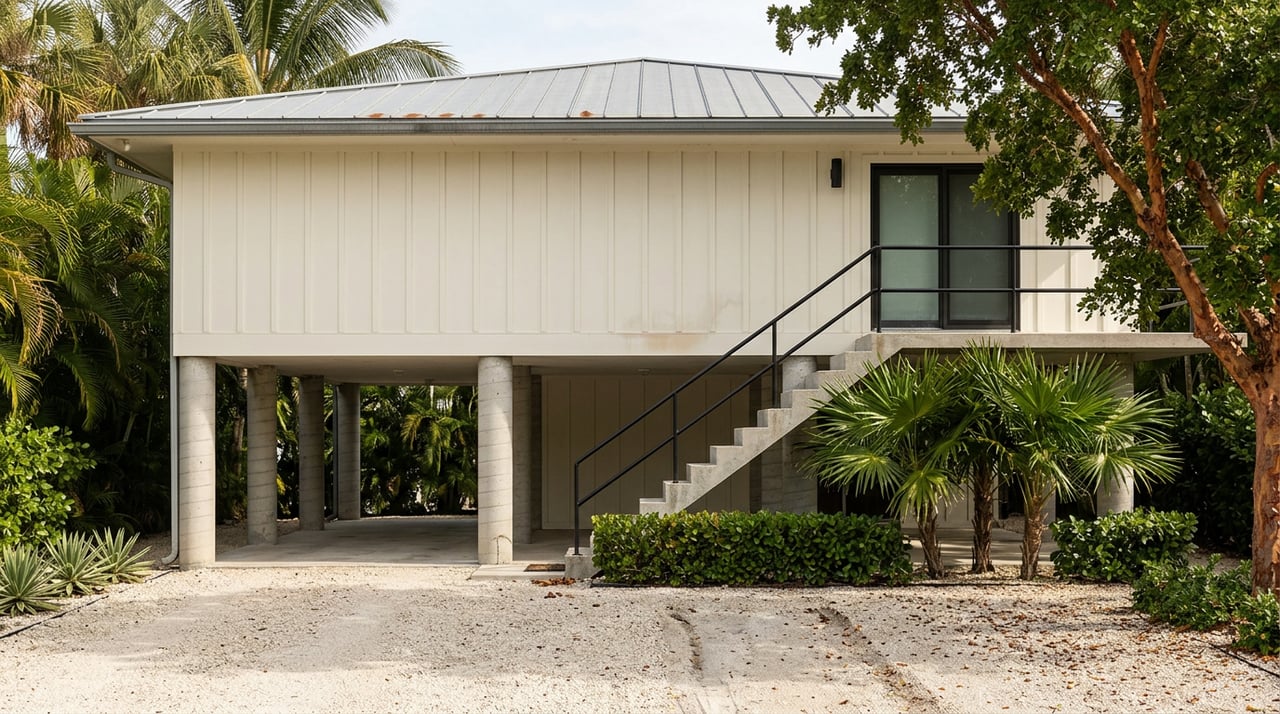
Scroll the Stock Island listings on any given week and you will land on two properties priced within a few thousand dollars of each other. One is an elevated manufactured home on Maloney Avenue. The other is a 45-foot wet slip a few blocks away at one of the island's marinas. Both sit in the same $300,000 to $600,000 band. A buyer comparing them side by side could be forgiven for treating them as the same kind of purchase with a different amenity attached.
They are not the same purchase. A house deed and a slip deed are built on entirely different legal ground in Florida, and the gap between what each one actually conveys is where boat slip buyers on Stock Island run into trouble, usually after they have already made an offer.
Three ways to "own" a slip, and only one of them is really ownership
Marina dockage in the Florida Keys comes in three structures, and marketing copy tends to flatten all three into the word "own."
A leased slip is a rental with a longer term. You pay the marina by the linear foot, you follow its rules, and when the lease ends your right to the slip ends with it. No deed changes hands. This is how most boaters at most marinas actually dock, and it is the cheapest way to get a spot, but it builds no equity and gives you nothing to resell.
A dockominium is a real estate purchase modeled on Florida's condominium statute. The marina operator subdivides the property into individually deeded slip-units plus shared common elements like the docks, parking, and bathhouse, then conveys the slip-units to buyers by deed, the same way a developer conveys condo units. You get a recorded deed, a vote in the association, and a share of the maintenance bill through monthly dues.
Here is the detail that catches Stock Island buyers off guard: Florida owns the submerged land under most marina slips. Your deed typically conveys the slip structure itself, not the bay bottom beneath it, which is usually held under a long-term sovereign submerged lands lease between the marina and the state. You are buying real property, but the water your boat sits in belongs to Florida, leased to the marina, and passed through to you as a slip owner under whatever terms that underlying lease sets. Ask for that lease document before you ask about finishes on the dock box.
A membership structure sits in between. You buy into a marina association that grants exclusive use rights to a slip without a deed to a specific unit. It functions more like a club membership than a real estate closing, and it resells more like one too.
Three Stock Island marinas, three different answers to "what am I buying"
Stock Island's marinas are not interchangeable, and the differences matter more than the view.
Stock Island Marina Village grew out of a 2011 purchase of 40 acres of old commercial fishing docks in Safe Harbor, and it is now built alongside the Perry Hotel with a dedicated liveaboard pier the developers named Coconut Row, where each slip comes with its own outdoor patio space. It is the most resort-adjacent option on the island, with hotel amenities within walking distance of the docks.
Safe Harbour Marina sits nearby as one of the few privately owned marinas left in the Keys, built in the late 1950s in what was once the heart of Stock Island's commercial fishing and shrimping docks. It markets itself on an older, less polished character, an eclectic mix of locals, transplants, and working boaters rather than a resort clientele.
Oceans Edge Resort and Marina, on the island's Atlantic side, offers deep-water access with full resort amenities, pool and clubhouse included, aimed squarely at buyers who want a slip and a vacation property experience bundled together.
Three marinas, three different ownership cultures, three different everyday realities on the dock. A slip at one is not a proxy for a slip at another, even when the price tags land close.
As Key West broker Suzanne Moore has put it, describing the island generally rather than any one marina:
"There are so many different kinds of people living out there, from the guy who is the dishwasher in the restaurant all the way up to the billionaire who has the million-dollar yacht in the marina a block up the road."
That range shows up in the slip market too. Recent listings tied to Stock Island addresses have spanned a dry rack storage slip at 6000 Peninsular Avenue for $300,000, wet slips at 5950 Peninsular Avenue ranging from $325,000 to $599,000, and a package of four 100-foot slips at 6810 Front Street listed at $3,395,000. Same island, same general stretch of waterfront, wildly different assets depending on size and structure.
The paperwork that decides whether you can sell it again
Financing a slip is harder than financing a house. Conventional lenders rarely finance a slip on its own, and the specialty lenders who do typically want 30 to 50 percent down. That alone changes your buyer pool when it is time to resell, and it should change your own math going in.
Florida law requires condominium associations, which most dockominiums fall under, to fund reserves for major repairs to docks, pilings, and electrical systems. An association with thin reserves is not a red flag you notice at the marina bar. It shows up in the meeting minutes and the budget documents, and it is the single best predictor of whether you will face a special assessment a few years after closing. Ask for the reserve study before you ask about the fuel dock hours.
The county is quietly making titled dockage more valuable
For years, boats have anchored for free in Boca Chica Basin, just off Stock Island, and in the waters around Wisteria Island near Man of War Harbor, with no formal mooring system, no required pump-out, and no oversight. Monroe County has spent close to two decades trying to change that.
An update delivered at the county commission meeting on April 15, 2026 laid out where that effort stands now. Final regulatory permits for both the Man of War Harbor and Boca Chica mooring fields are expected by late 2026. Construction is set to begin in early 2027, with Man of War Harbor completing that June and Boca Chica finishing in December 2027. Once built, boats using those fields will pay a fee, follow a tenant agreement, and submit to weekly pump-out requirements, formalizing what has been free and unmanaged for decades.
Commissioner Craig Cates framed the project as balancing two goals at once, saying the investments show "Monroe County's long-term commitment to balancing environmental protection with responsible boating."
That framing matters for anyone weighing a slip purchase right now. The free, informal option nearby is going away, replaced by a metered, regulated one. A deeded slip with clean title, adequate reserves, and a straightforward submerged lands lease is not competing against unlimited free anchorage anymore. It is competing against a paid mooring ball with its own rules, its own waitlist, and its own fee schedule. That shift does not show up in a listing price today, but it is the reason a well-documented slip on Stock Island is worth more scrutiny now than it was two years ago, not less.
Before you write an offer on a slip
- Ask whether the slip is deeded, leased, or membership-based, in writing, not from a brochure
- Request the submerged lands lease if the marina sits on state-owned bottom, and check the remaining term
- Pull the association's reserve study and look for gaps between funded and needed reserves
- Confirm liveaboard rules, subleasing rights, and any pet or vessel-type restrictions specific to that marina
- Talk to a lender early. Slip financing terms differ enough from home financing that pre-approval on one tells you nothing about the other
A boat slip on Stock Island can be a smart, well-secured asset or a paperwork problem waiting for its next owner. The difference is rarely the view. It is the deed.
Buying dockage, a canal-front home, or both at once on Stock Island is a conversation worth having with someone who reads these deeds for a living. Jamie Lynne Walker works this waterfront daily and can walk you through what a specific slip or listing actually conveys before you write an offer. Start Your Keys Journey — Let's Find Your Home.