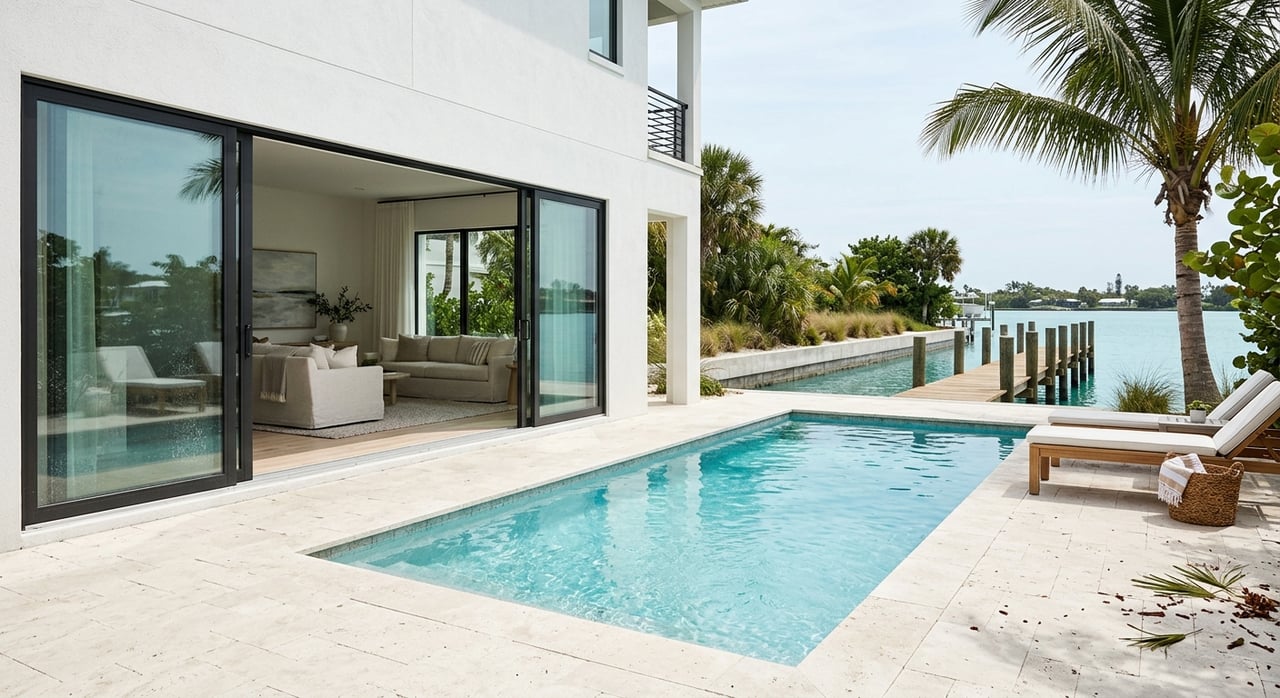
If you are looking at Shark Key, you are probably asking a smart question early: what kinds of homes and lots are actually here, and how much do they differ from one property to the next? That matters because Shark Key is not a one-size-fits-all neighborhood. From elevated concrete homes to Mediterranean-inspired waterfront estates, and from smaller water-view parcels to larger frontage-heavy lots, the details can shape everything from daily lifestyle to long-term carrying costs. This guide will help you understand the home styles, lot types, and key decision points so you can compare Shark Key properties with more confidence. Let’s dive in.
Shark Key at a Glance
Shark Key is a gated island community in Monroe County near mile marker 11.3 off US-1, just minutes from Key West. According to the community guide, it includes 75 building lots, with about half developed. That smaller scale is part of what gives the neighborhood its distinct feel.
Ownership here also includes access to shared amenities listed in the HOA guide, including a clubhouse, private beach, tennis courts, basketball court, and a lagoon beach and swim area. Even though the community is known for waterfront living, those amenities add value beyond any one individual parcel.
Shark Key is also covenant-controlled. The HOA guide notes that architectural review board approval is required before improvements, and owners may also see separate assessments related to mangrove trimming and vacant-lot maintenance.
Shark Key Home Styles
Shark Key is primarily a custom single-family home community. You are not usually comparing attached housing or cookie-cutter floor plans here. Instead, you are looking at a mix of individually designed homes with different construction approaches, elevations, and view strategies.
Custom waterfront homes
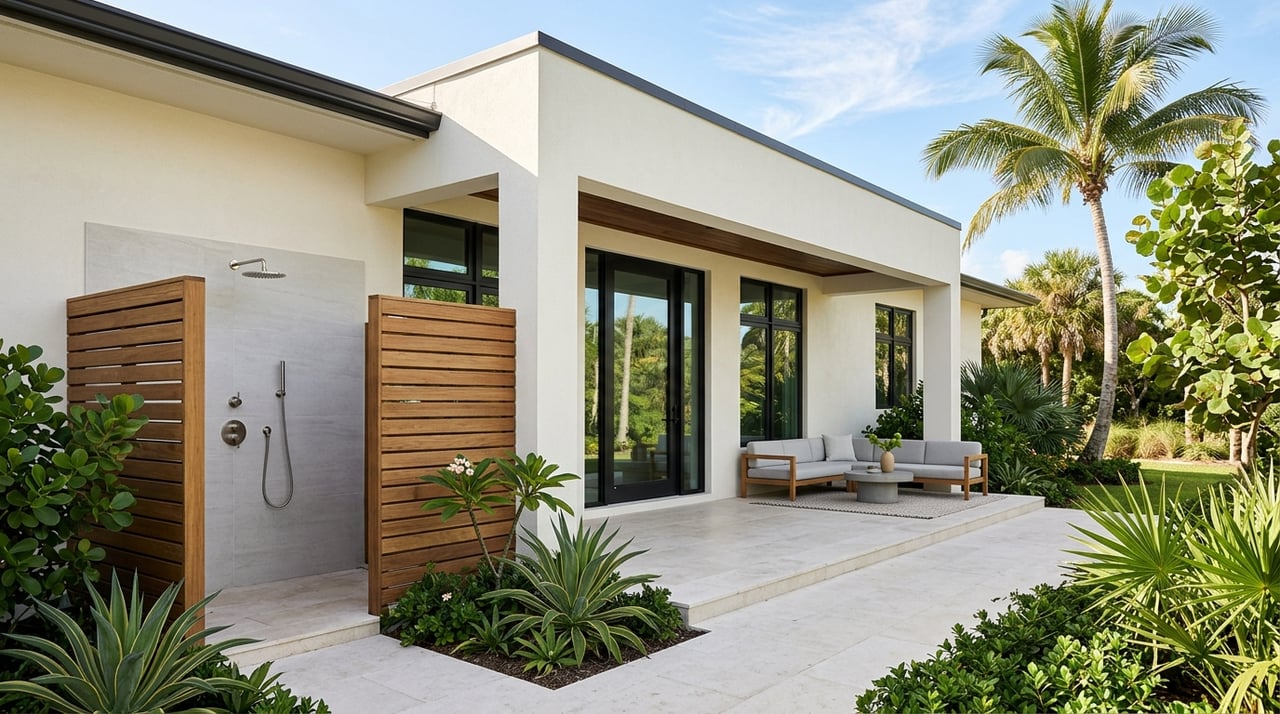
Many Shark Key homes follow what you could call a Florida Keys luxury formula. Listings and permit records point to features like wide glass openings, open layouts, covered porches or lanais, pools, storage, and a strong indoor-outdoor flow.
In practical terms, that often means a home designed to pull your attention toward the water. Large living spaces, outdoor entertaining areas, and broad view lines are common themes in the homes buyers tend to see here.
Elevated concrete and stilted homes
One of the most common functional styles in the Lower Keys is the elevated home, and Shark Key is no exception. Recent examples include concrete stilted homes and pile-supported new construction.
This style is not just about appearance. In the Keys, elevation can connect directly to flood planning, construction methods, and how a home is rebuilt or improved over time.
Mediterranean-inspired estates
At the higher end of the market, Shark Key also includes Mediterranean-inspired homes with stucco exteriors, impact glass, and larger estate-style layouts. These homes often blend classic luxury design with practical coastal features.
That means you may see details like grander entries, larger square footage, and room reserved for features such as a future elevator. Even within this style, the look is still highly custom rather than uniform.
Split-level and open-plan layouts
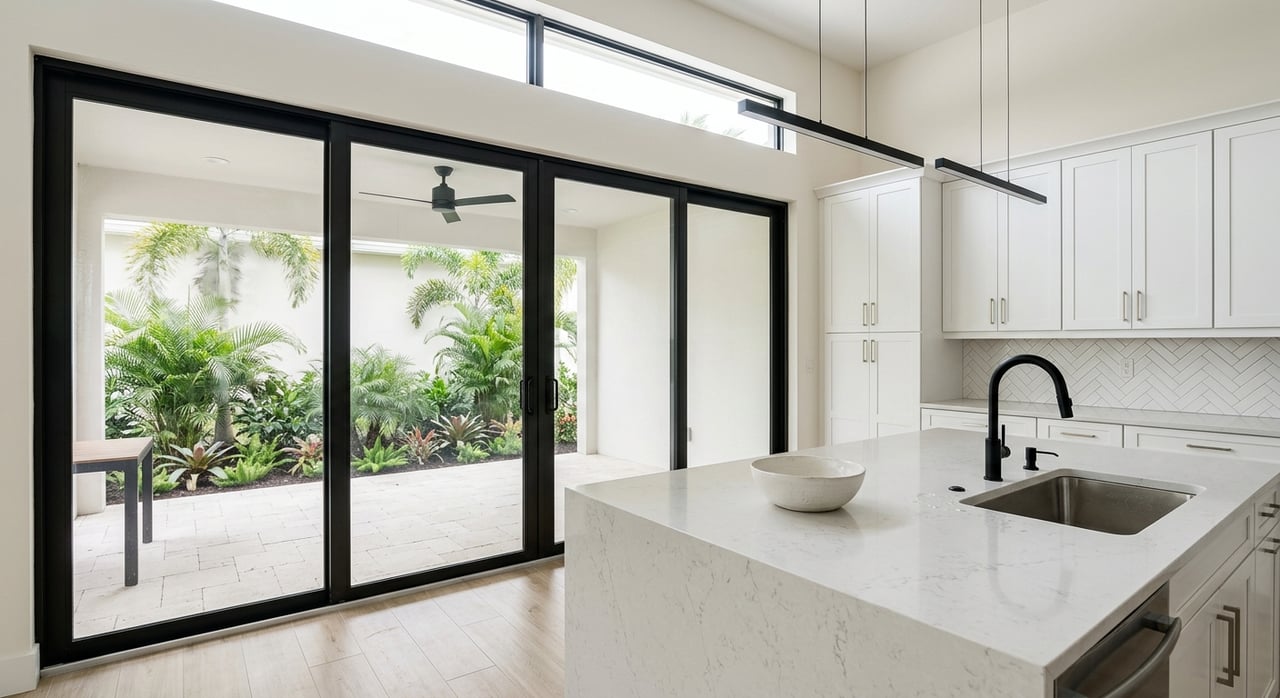
You may also come across split-level residences and homes built around lofts, vaulted ceilings, and open great-room concepts. In Shark Key, layout design often serves two goals at once: maximizing water views and making the exterior feel like part of the living space.
That is why walls of windows, wide openings, and easy transitions to pool decks or covered outdoor areas show up so often. The floor plan is usually built around the setting.
Common Construction Features
When you compare Shark Key homes, style is only one piece of the picture. Construction quality and resilience are often just as important.
Recent listing and permit examples show common features such as CBS exterior walls, stucco finishes, impact-rated windows and doors, flat tile roofs, generators, solar panels, cisterns, elevators, and elevated concrete pools. Not every home will have all of these features, but they reflect the kinds of upgrades and design priorities buyers often see in this market.
These details matter because they can affect maintenance, storm readiness, insurance, and everyday comfort. In a place like Shark Key, buyers usually need to look past surface finishes and understand how the house is built.
Shark Key Lot Types Explained
Lot type is one of the biggest value drivers in Shark Key. While many buyers focus first on the home, the parcel itself can shape view quality, privacy, dockage options, and future building flexibility.
Open-water and shoreline lots
The dominant lot story in Shark Key is water frontage. Recent listings describe oceanfront, gulf front, open-water, and bay-front parcels, and shoreline footage can vary widely from one property to another.
Examples in recent marketing have included frontage figures such as 71 feet, about 105 feet, around 130 feet, and even much larger shoreline exposure in select estate-style offerings. That range is a reminder that not all waterfront lots deliver the same visual impact or use potential.
Interior and amenity-supported lots
Not every parcel has the same dramatic open-water position. In those cases, the community amenities can play a bigger role in the ownership experience.
Because Shark Key includes shared access to a lagoon, beach, clubhouse, and courts, some lots may still offer a strong lifestyle fit even if they do not have prime open-water frontage. That is important if you are balancing budget, location, and day-to-day enjoyment.
Typical lot sizes
Based on the sources reviewed, many marketed Shark Key parcels fall roughly between one-third and three-fifths of an acre. That gives you a useful baseline when comparing listings.
At the same time, you should not assume every lot follows that pattern. Shark Key also has larger estate-scale opportunities and assembled parcels, so size can vary more than you might expect at first glance.
Why Orientation Matters
In Shark Key, orientation can be just as important as frontage length. Two lots with similar square footage may feel completely different depending on how they face the water.
Some parcels are specifically marketed for west-facing sunset views, while others emphasize both sunrise and sunset exposure. The angle of the shoreline can change the light, the view experience, and even how outdoor living spaces are used throughout the day.
If views are a priority for you, it helps to go beyond the phrase “waterfront” and ask exactly what kind of exposure the lot has. That can be one of the biggest differences between listings that seem similar on paper.
Dockage Is Parcel-Specific
If you are a boating-focused buyer, this is one of the most important Shark Key details to verify. Dockage is not automatic across the community.
Recent examples show that some properties mention dockage or dock-related rights, while others specifically note no dockage. County permit records also show a Shark Key parcel with a swim-platform permit, which reinforces that marine improvements are property-specific.
In other words, you should not assume that every waterfront lot gives you the same marine access options. If boating matters to your lifestyle, this deserves a separate layer of due diligence.
Zoning and Building Rights Can Vary
Another easy mistake is assuming every Shark Key parcel has identical use rights. Recent listings show more than one zoning classification, including IS and SR.
That means you should verify the exact parcel classification for any lot you are considering. A similar-looking lot next door may not have the same building envelope or development path.
For vacant lots, teardown projects, or long-term planning, permit status matters too. Monroe County explains that residential permits are awarded through the ROGO or NROGO allocation process, so a lot with approved plans, transferable building rights, or an active permit can be very different from raw land without those approvals.
Flood Zones and Elevation Affect Decisions
In Shark Key, flood-zone placement is not a minor technical detail. It is a core part of how you evaluate a property.
Recent listing data shows that Shark Key parcels can fall into different flood-zone designations, including AE and mixed VE/AE. Monroe County also states that flood maps are used to determine minimum elevations and construction methods, and the county permit process includes acknowledgement of preliminary flood maps.
For you as a buyer, that can affect design options, redevelopment potential, insurance, and long-term carrying costs. If you are comparing older homes, rebuild candidates, or vacant lots, this step becomes especially important.
What Often Drives Value in Shark Key
While every buyer has different priorities, a few factors tend to drive value again and again in Shark Key. The main ones are:
- Frontage length
- View quality
- Lot orientation
- Dockage or marine-access potential
- Lot size
- Privacy
- Structural quality and resilience
- Permit or entitlement status for land
- Flood-zone placement and elevation requirements
A west-facing open-water lot with strong shoreline exposure is usually a very different product than a smaller parcel with more limited water exposure. The same goes for a lot with permits or building rights already in place versus one that still needs to move through the approval process.
Carrying Costs Matter Too
It is easy to focus on architecture and views, but carrying costs are a major part of ownership in the Lower Keys. Monroe County states that wind insurance affordability is a critical issue, that the vast majority of county properties carry wind coverage through Citizens, and that Monroe County’s Citizens wind rates are the highest in the state.
That does not make Shark Key any less appealing. It just means a smart purchase decision should include the full cost picture, not only the purchase price.
A Simple Shark Key Comparison Checklist
When you are narrowing down homes or lots in Shark Key, it helps to compare each property through the same lens. A simple checklist can keep the process clear.
- What home style is it, and how custom is the layout?
- Is the structure elevated, pile-supported, or built with CBS construction?
- What kind of water exposure does the lot have?
- How much shoreline frontage is there?
- Is the parcel oriented for sunrise, sunset, or both?
- Is there confirmed dockage, marine access, or a related permit?
- What is the exact zoning classification?
- What flood zone applies to the parcel?
- Are there approved plans, active permits, or transferable building rights?
- What HOA approvals or assessments should you budget for?
That kind of side-by-side review can save you from treating all Shark Key listings as interchangeable when they are clearly not.
If you want help sorting through Shark Key home styles, lot differences, dockage questions, or the practical side of buying in the Lower Keys, Jamie Lynne Walker can help you compare options with a local, hospitality-first approach.
FAQs
What kinds of homes are most common in Shark Key?
- Shark Key is mostly made up of custom single-family homes, including elevated concrete homes, Mediterranean-inspired waterfront residences, split-level layouts, and larger open-plan estates designed for indoor-outdoor living.
What lot types can you find in Shark Key, Florida?
- Buyers commonly see oceanfront, gulf front, bay-front, and open-water lots, along with parcels that may rely more on community amenities than dramatic shoreline frontage.
Do all Shark Key waterfront lots include dockage?
- No. Recent listings and permit examples show that dockage and marine improvements are parcel-specific, so you should verify them separately for each property.
Why does lot orientation matter in Shark Key?
- Orientation affects the type of water view you get, including whether a property is positioned for sunset views, sunrise views, or both, which can change the feel and value of the lot.
Are Shark Key lots all the same size?
- No. Many marketed parcels fall roughly between one-third and three-fifths of an acre, but larger estate-scale and assembled parcels also exist.
What should buyers verify before buying a Shark Key lot or home?
- Buyers should confirm parcel boundaries, building characteristics, sales history, flood-zone placement, zoning classification, HOA rules, ARB approval requirements, assessment obligations, and any permit or building-right status tied to the property.